
Metro Connect USA has long been where the companies building digital infrastructure come together to solve the industry's biggest challenges.

Now, for the first time, we're launching a dedicated Design and Construction Summit within the brand new Core Networks Stage.

This is your opportunity to join the owners, contractors, engineers and construction leaders redefining how networks and AI infrastructure get built. From new funding models and permitting strategies to AI-ready network design and multi-gigawatt campus construction, you'll be part of the conversations shaping the next generation of infrastructure delivery

The Summit concludes with a Happy Hour, giving you the chance to continue your conversation and connect with a tailored community that understands the challenges and opportunities you face every day.
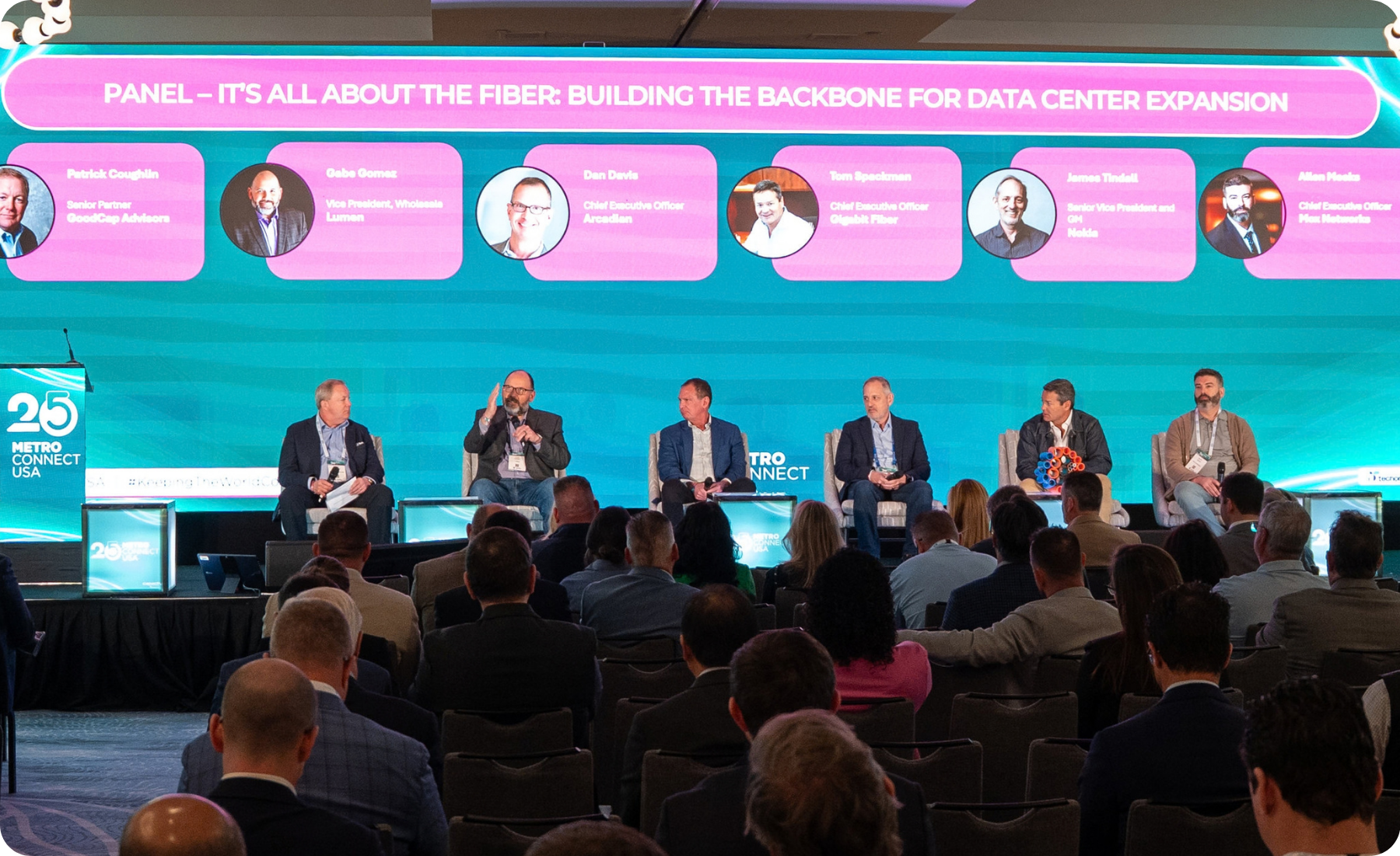

A panel on data center fiber from this year's Metro Connect USA
Loading
14:00
  1.  Design and Construction Summit

    Core Networks Stage
    45 mins
    Rising build costs, labor shortages, evolving funding models, and increasing pressure to accelerate deployment timelines are forcing operators to rethink how networks are planned, financed, and delivered. From public-private partnerships and joint builds to innovative deployment strategies and new approaches to risk sharing, the traditional fiber construction playbook is being rewritten. This panel will explore how network builders are adapting to a new era of infrastructure investment and what it means for the future of fiber expansion. How are rising costs, labor constraints, and supply chain challenges changing the economics of fiber network construction? What new financing, partnership, and deployment models are emerging to accelerate network rollouts while managing risk? How can operators balance the need for faster deployment, greater coverage, and long-term investment returns in an increasingly competitive market?
14:45
  1. Core Networks Stage
    45 mins
    The true make-it-or-break it milestone for digital infrastructure projects is now the moment a permit is, or can be, secured. Whether building fiber networks, data centers, power infrastructure, or associated facilities, operators and contractors are increasingly navigating complex regulatory frameworks, inconsistent local requirements, and lengthy approval processes. This panel will explore how the industry can overcome permitting challenges, accelerate project delivery, and create a more efficient path from investment to deployment. How are permitting and approval processes affecting the speed and economics of infrastructure deployment? What best practices are helping operators, contractors, and local authorities streamline approvals and reduce project delays? What policy, regulatory, and industry changes are needed to ensure permitting does not become a long-term barrier to digital infrastructure growth?
15:30
  1. Core Networks Stage
    30 mins
16:00
  1. Core Networks Stage
    45 mins
    The transition to AI-first and AI-ready infrastructure requires more than just GPUs, memory, and a lot more power. The shift to AI dominance requires a complete rethink of network architecture, from high-speed fabrics to optical networking, the network is now the critical enabler of AI performance. This panel will explore how the rise of AI-first facilities is transforming network design and what operators must do to prepare for the next generation of AI infrastructure. How are AI workloads changing the requirements for data center network architecture, capacity, and performance? ' What role will technologies such as high-speed interconnects, optical networking, and advanced network fabrics play in supporting AI at scale? How can operators balance performance, resilience, energy efficiency, and cost as they design networks for the AI era?
16:45
  1. Core Networks Stage
    45 mins
    This is the era of the AI Factory. Moving beyond mere jargon, the multi-gigawatt AI campus has become the central model for data center design as ever-more sophisticated AI models need to be trained on ever-increasing amounts of data. They must also be built to accomodate future requirements in an era where radical change occurs every 5 minutes, not just every 5 months or 5 years. Increasing rack densities due to leaps in compute power send shockwaves across the ecosystem, but nowhere are these more keenly felt than for those already designing and building. This panel will explore: How can data center developers, hyperscalers, and neoclouds stay several steps ahead of future construction requirements for AI factories? What strategies can be devised with partners from across the ecosystem, from the end-customers in need of compute to chip manufacturers to construction subcontractors, to plan for the multi-GW age? How can construction supply chain strategies be adapted to meet more than the already overwhelming present demand?